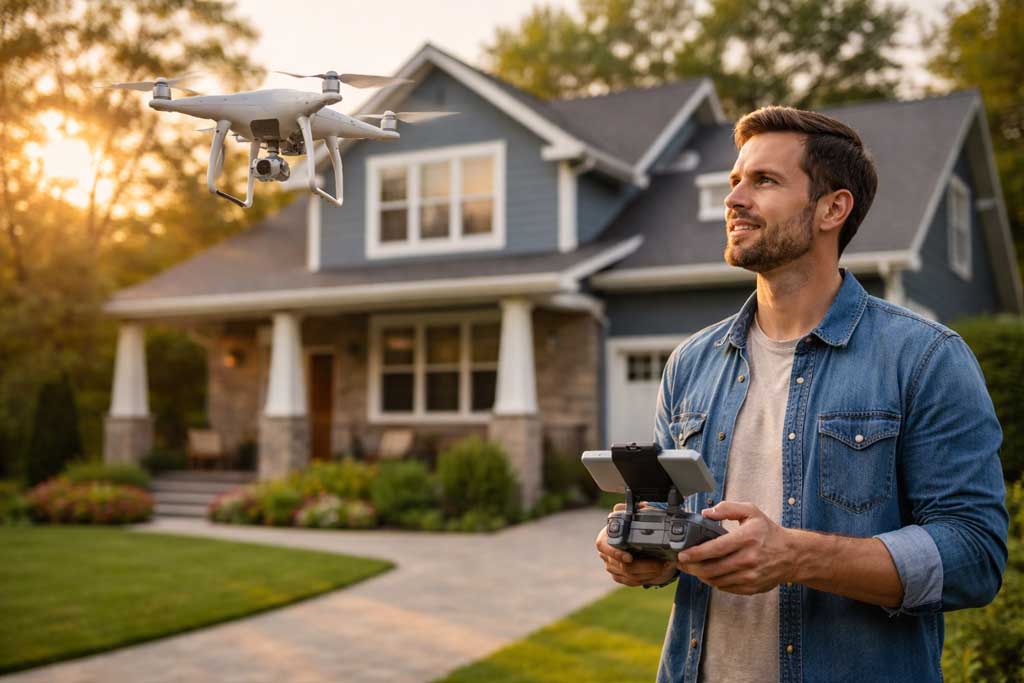
Estate agents have always looked for better ways to present properties. Professional photography, video tours, floor plans and virtual viewings have all become part of the modern property marketing toolkit. Increasingly, another technology is joining them: the commercial drone.
Aerial photography can transform the way a property is presented, particularly for large homes, rural properties, developments and houses with substantial gardens or impressive surroundings. But using a drone for business purposes introduces another consideration that estate agents cannot afford to overlook: insurance.
So, do estate agents need drone insurance commercial, and could having the right cover actually help their business thrive?
How Estate Agents Are Using Drones
Drone work has become particularly useful because it gives potential buyers a perspective that conventional photography simply cannot provide.
An estate agent can use aerial footage to show the full extent of a property and its surroundings. Instead of seeing a garden as a flat rectangle at the back of a house, a drone can demonstrate its size, landscaping, position and relationship with neighbouring properties.
For larger or more unusual properties, this can be especially valuable. Aerial imagery can showcase:
- Large gardens and grounds
- Country houses and rural estates
- Waterfront properties
- Development sites
- Commercial premises
- Holiday lets and leisure properties
- New-build developments
- Properties with substantial driveways or outbuildings
Drone video can also be incorporated into property walkthroughs and social media content. A short aerial sequence can make a listing stand out on platforms where agents are competing for attention.
Why Drone Marketing Can Help An Estate Agency Thrive
The value of drone photography isn’t simply about having impressive images. It can contribute to the overall marketing strategy.
Property buyers increasingly research homes online before arranging a viewing. Strong visual content can therefore make the difference between someone scrolling past a listing and stopping to investigate it.
For estate agents, drone footage can also help communicate the lifestyle associated with a property. A house near open countryside, for example, can be marketed alongside aerial views showing fields, woodland and nearby amenities. A coastal property can be presented in the context of its surroundings rather than as a collection of rooms.
There is also a branding benefit. An agency that consistently produces polished photography and professional aerial footage can appear more sophisticated and innovative than one relying entirely on standard listing photographs.
But Commercial Drone Work Carries Risks
The fact that a drone is being used for an estate agency’s business activities is important.
A drone isn’t simply another camera. It is an aircraft capable of operating above people, vehicles and buildings. Even an apparently straightforward property shoot can present risks involving damage to property, injury to third parties or loss of the drone itself.
There can also be reputational consequences if something goes wrong during a marketing shoot.
This is why estate agents should distinguish between ordinary business insurance and specialist cover for commercial drone operations. Depending on the circumstances, a standard business policy may not provide the protection the agent assumes it does.
What Does Commercial Drone Insurance Cover?
Commercial drone insurance is designed around the risks associated with using drones for business purposes. Policies vary, so an estate agency should examine the precise wording rather than simply choosing the cheapest option.
Cover may include public liability associated with drone operations, damage to the drone itself and other risks connected with commercial aerial work. Some policies may also offer options for equipment, theft or accidental damage.
The important point is that commercial use should be declared properly.
Using a drone to take photographs for an estate agency is very different from flying one recreationally at the weekend. An agent should make sure the insurer understands exactly how the drone will be used, who will operate it and what sort of work will be undertaken.
Could Insurance Become a Competitive Advantage?
Insurance isn’t normally something a property buyer sees when looking at an estate agency’s website. However, it can contribute indirectly to a company’s reputation.
An agency that invests in professional equipment, properly trained operators and appropriate insurance is demonstrating that its aerial marketing isn’t an improvised add-on. It is part of a properly managed service.
This becomes particularly important if an estate agency employs staff to operate drones or commissions regular aerial work from contractors.
It is also worth considering who actually owns the risk. If an estate agency uses an external drone operator, the agent should establish whether that operator has suitable commercial insurance rather than simply assuming that they do.
Check The Rules As Well As The Insurance
Insurance is only one part of responsible drone operation.
Estate agents should also ensure that whoever flies the drone understands the applicable UK aviation rules and any restrictions affecting the location of the property. Some properties may be close to airports, restricted areas, busy roads or other locations where additional considerations apply.
The operator should also think carefully about privacy, neighbouring properties and people who may be present during a shoot.
The exact legal and insurance requirements can depend on the drone, how and where it is operated, and the nature of the work. Rules can also change, so estate agencies should obtain current guidance rather than relying on assumptions based on previous drone flights.
The Drone Is Becoming Part Of The Property Marketing Toolkit
For estate agents, drone photography is no longer just a novelty reserved for spectacular country houses. It can be a practical marketing tool for showing properties from a completely different perspective.
Used properly, it can create better listing imagery, more engaging video content and stronger social media campaigns. But commercial drone work needs to be treated as a professional business activity, with appropriate procedures, competent operators and suitable insurance.
So, do estate agents need commercial drone insurance? If they are operating drones as part of their business, they should not assume that ordinary business insurance automatically covers them. Checking the policy, understanding the risks and arranging appropriate specialist cover can help protect both the agency and the reputation it has worked hard to build.
In an industry where presentation is increasingly important, drones can help an estate agency stand out. The key is making sure the business behind the drone operation is just as professional as the footage it produces.
Featured image credit: AI generated.